

We’re told self-preservation is an instant, automatic act of protecting ourselves when we’re in danger. But in real life, most of the danger we face isn’t a tiger in the woods or a car swerving into our lane. It’s a slow and quiet erosion of ourselves in an effort to be more loving, more loyal, and an overall better person.
Sure, we can use self-preservation to survive physical threats. But when self-preservation becomes a part of your identity, it turns into this conscious effort to preserve your emotional, mental, and spiritual self by being intentional about where your energy is spent. It’s the knowing that you have a right to keep parts of yourself off-limits.
And yet, for a lot of us, that feels wrong. We’ve been taught that it’s noble to put ourselves last, to be endlessly available, and to “be there” no matter the cost. And we don’t even think of it as giving bits and pieces of ourselves away, we see it as a natural thing to do for the people we love and admire.
Here’s the uncomfortable truth: you need to fully understand yourself and build self perseverance to live a life that does justice to you.
What happens when you don’t protect yourself
A lack of self-preservation doesn’t feel like a dramatic collapse at first. It’s a gentle erosion of yourself each time you say yes when you actually wanted to say no, or when you swallow the truth to not hurt the person across from you, and all the times you pretend you’re doing great to not make life harder for the people around you.
You burn out

Burnout starts like a constant feeling of being tired, and you put it down to other things happening in your life. It looks like thinking you’re tired because you had a busy week, or because you’re working overtime to meet that work deadline, or that you’re really just okay and maybe this is just the flu taking its toll.
But then you wake up one morning and even the thought of doing something you normally enjoy feels heavy. That’s burnout in play, and it can often leave us feeling confused, exhausted, and like we’re losing control of our own emotions.
You start to resent the people you love
We’re taught that loving other people means showing up even when we’re tired and making space for them no matter our own circumstances. And sure, you have to be a villager to have a village around you, but that doesn’t mean we don’t take care of our own space first. And for someone who keeps showing up for other people, it seems only natural to start keeping score.
And when the same people don’t pick up on your needs? That’s where resentment steps in and you slowly find loving them to be harder because you’re sad and hurt about things they don’t even know of. The next time they ask for a tiny favor? It feels like a personal offense.
You disconnect from your own body and needs
Maybe you’ve skipped lunch so often you don’t even notice you’re hungry anymore, or maybe you’ve been tired for months and now you don’t know if it’s just sadness or actual bone-deep exhaustion. When you train yourself to override your limits, your body stops sending the signals, and you lose the ability to read your own needs.
You call it “coping,” but you’re really disappearing

There’s a version of coping that looks a lot like shutting down. You wake up, go through the motions, make polite conversation, check boxes. You look like you’re doing fine, but from the inside it feels like you’ve dimmed all the lights just to make it through your normal life. And over time, your sense of self becomes so faint you can’t tell where you end and other people’s demands begin.
Why you need emotional self-preservation
At first, self-preservation can look like selfishness, but soon you will realise that when you protect your own energy, you can start giving more honest pieces of yourself to the people you love. And when you show up honestly, you stop handing out yesses that you’ll resent later and you will create the space for connection that builds you instead of exhausting you.
But getting to that point means undoing decades of conditioning.
From childhood, we’re taught that “good” people put others first. You hug relatives you don’t want to hug because it’s what’s expected of you. You say sorry when someone bumps into you even though it was them who couldn’t bother to look up from their phone. And through these conditioned responses, you learn that your worth is tied to how much you give and how little you ask for in return.
And because it’s everywhere, it starts to feel like the natural order of things rather than a conscious choice you make for yourself.
5 ways to build self-preservation (even if it feels unnatural)
1. Pause before saying yes

Most of us have a reflexive yes, it’s how we’ve survived socially. But each yes you give without thinking is a small theft from yourself. Next time someone asks something of you, take a tiny pause and really think about it. Is it something you even want to do? If the answer is yes, you’re making an intentional choice to give a piece of you to someone else. And if the answer is no? You know what to do.
2. Let your “no” be enough
On the topic of saying no, we often feel like a no has to come with a reasonable justification. Like you have to have a valid reason for not being able to do the thing. Here’s a little secret: that valid reason doesn’t always have to be tangible. Not wanting to do the thing is as much a valid reason as having an important event you’ve already RSVPd to.
3. Stop explaining your pain away
Can you remember when you last softened your own pain because you didn’t want to put your friend in an awkward situation? Yeah, stop doing that. If something has affected you deeply, you owe it to yourself to voice it. Next time you have the urge to say “it’s not that bad”, or “I’m just tired”, give yourself the space for the truth.
4. Choose small actions that protect you
You know that coworker who always texts you at 9pm for something they could’ve asked for earlier as well? Next time, just not respond to the text. It feels illegal, but it really isn’t. And while we’re on that, there’s no reward for missing lunch breaks or showing up to your second cousin twice removed’s retirement party. These small acts of choosing yourself slowly teach your nervous system that you’re safe with yourself.
5. Use the MS Method to build mental toughness
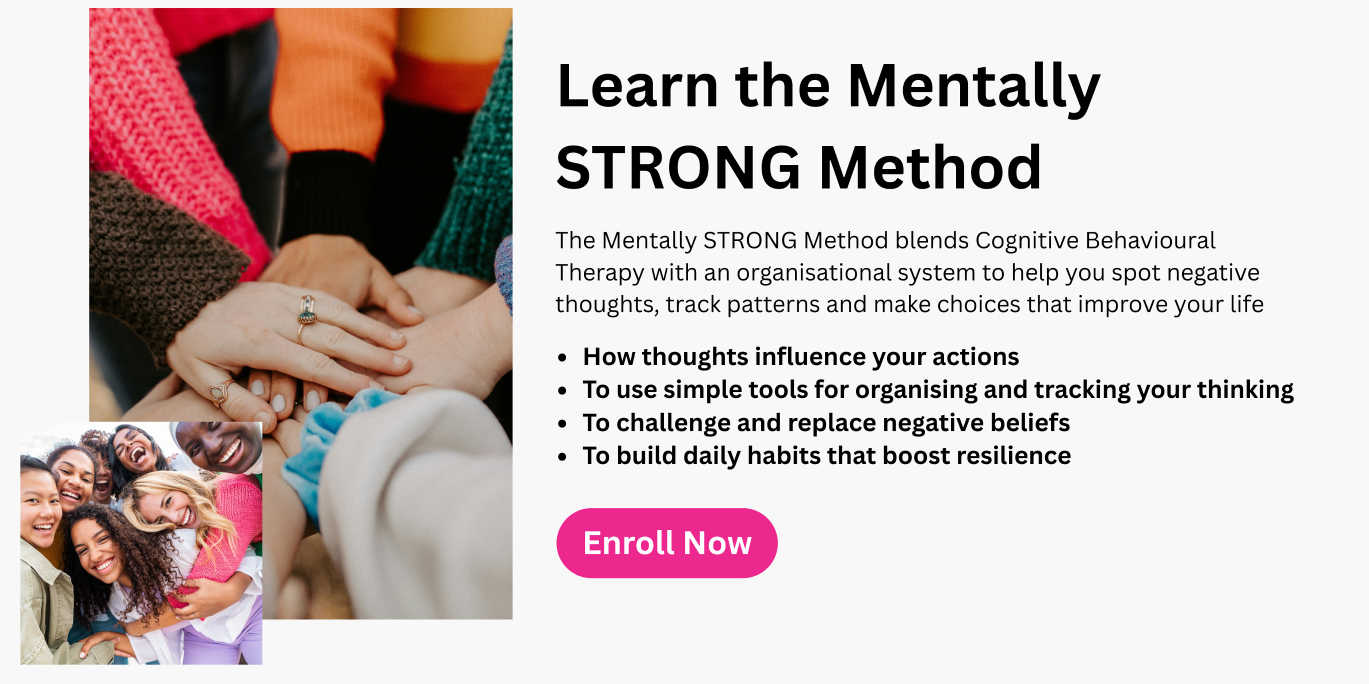
The Mentally Strong Method was born out of my own need to survive the unthinkable and to help others do the same. I’d been a psychiatric nurse practitioner for years, but when life knocked the wind out of me, I needed a way to make sense of my thoughts, see what was mine to carry, and decide where my energy would go.
Here’s how it works:
- Thought Map: Get every thought, feeling, and trigger out of your head and onto paper. No editing. No pretty sentences. Just the truth.
- Identify & Organize: Sort those thoughts into categories, so you can see the difference between grief, guilt, injustice, or someone else’s problems.
- Power of Choice: Decide what you can change, what you want to change, and what you’ll let go.
- Personal Vision: Create a sustainable, empowering picture of the life you want to move toward… even if the pain never fully leaves.
So if you’re tired of constantly making space for everyone else and want to finally choose self perseverance, the course built directly on this method is a good place to begin.

Click here for instant access.
Takeaway
True self-preservation means breaking the cycle of self sacrifice and overgiving we’re taught our entire lives. It means finding the parts of yourself you’ve handed away in the name of love, loyalty, or belonging and taking them back. And in real life, self perseverance looks like honoring your own limit and letting yourself matter just as much as the people you care for.
And when you do this, you stop running on scraps of rest and borrowed joy. You show up for yourself first, and then for others, in ways that are sustainable and resentment-free. I leave you with this: You are allowed to take up space in your own life, and the day you believe that is the day you finally start living for yourself.might be a way to meet yourself where you are… and take the next step from there.